Crypto Regulation Pakistan 2026: PVARA Licensing, Banking Rules & What You Need to Know
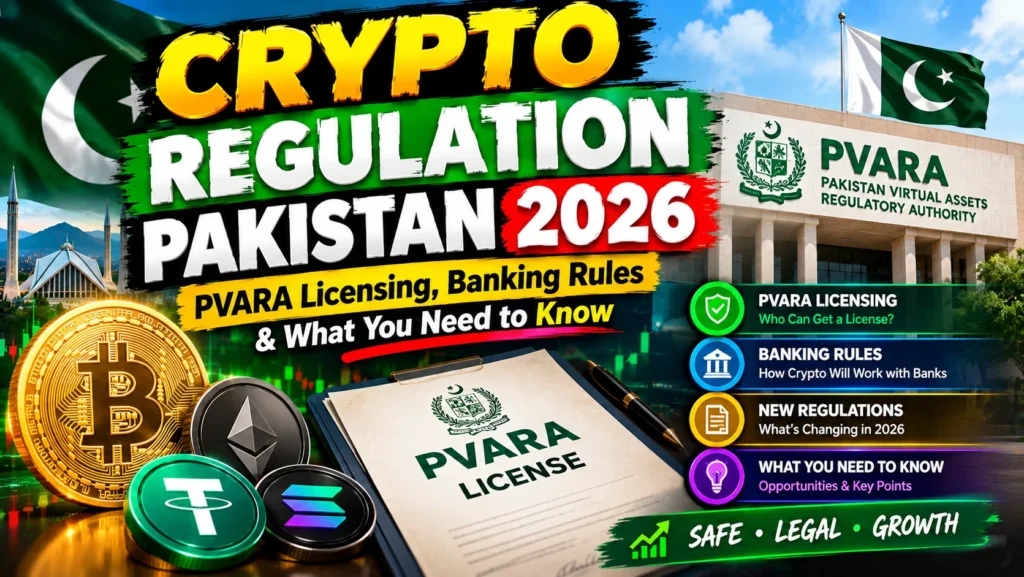
Crypto Regulation Pakistan 2026. If you traded crypto in Pakistan before 2026, you already know the story. It was a complete grey area. You could buy and sell, but your bank would block you. One WhatsApp forward would say crypto is banned, the next would say it’s legal. No one really knew.
That confusion is finally over. Now we have a proper law – the Virtual Assets Act, 2026 – and a proper regulator Pakistan Virtual Assets Regulatory Authority (PVARA). Pakistan has officially moved from “let’s ban it” to “let’s regulate it.” So whether you are trading on Binance, building your own exchange, or just holding some dollars in USDT, you need to understand this new system.
Crypto Regulation Pakistan 2026: The End of the 2018 Banking Ban
Crypto Regulation Pakistan 2026. Let’s go back a bit. In April 2018, State Bank of Pakistan put out a circular. It told all banks, microfinance banks, EMIs basically everyone SBP regulates to stop dealing with virtual currencies.
A lot of people misunderstood it. They thought crypto itself became illegal. No. What SBP said was, banks can’t facilitate it. It was a protective step because at that time there was no law for crypto. Crypto Regulation Pakistan 2026. But on the ground, what did it do? It made life hell for regular traders. You had crypto in your wallet, but you couldn’t convert it to PKR easily. P2P was the only way left, and even that felt risky because your bank account could get flagged any time.
Then came April 2026. SBP issued BPRD Circular Letter No. 10 of 2026 and reversed that old circular. Now, banks are actually allowed to open accounts for Virtual Asset Service Providers (VASPs) – but only if those VASPs are licensed by PVARA. That was the moment the wall between banks and crypto finally broke.
Understanding PVARA: Pakistan’s New Crypto Watchdog
PVARA is now the main character in all this. Full form is Pakistan Virtual Assets Regulatory Authority. It was created under the Virtual Assets Act, 2026 and its job is to license, regulate and supervise anyone dealing with virtual assets in Pakistan. Crypto Regulation Pakistan 2026.
And it’s not just for exchanges. PVARA’s scope is huge crypto exchanges, custodians, brokers, lending and borrowing platforms, derivatives, portfolio management, token issuance, even mining.
One thing that honestly surprised me how fast they became operational. Usually in Pakistan these things take years. But PVARA started working within months of the law passing. Even compared to Dubai and Singapore, where it took them a long time to build VARA and MAS frameworks, Pakistan moved pretty quickly here.
Two Pathways to Compliance
PVARA has given two routes for companies that want to operate legally:
- The NOC Route: If your company was already serving Pakistani users on or before March 5, 2026, you had to apply for a No-Objection Certificate (NOC) by September 5, 2026. Important: NOC is NOT a full license. It’s just a clearance slip that says you can start the process – register with FMU, make a local subsidiary, and then apply for the actual license.
- The Regulatory Sandbox: If you are doing something new – like a new kind of DeFi product or some experimental model – you can apply to the sandbox. PVARA will let you test it under close supervision.
If you keep operating without any NOC or license after the deadline, that’s a serious offense. Section 70 of the Act is very clear about it.
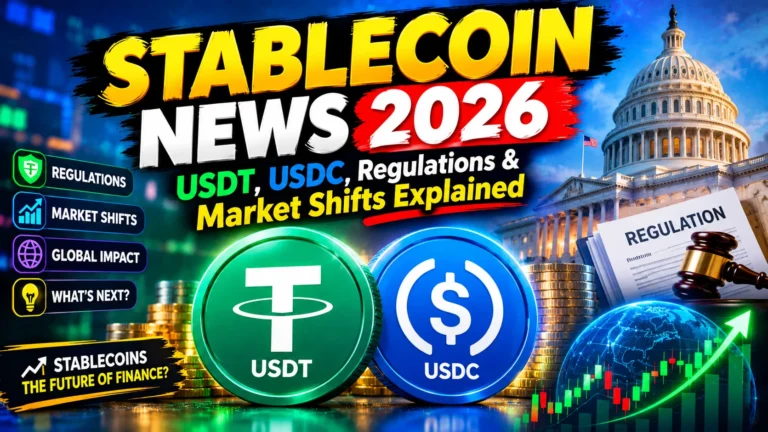
Also Check: Stablecoin News 2026: USDT, USDC, Regulations & Market Shifts Explained
What Banks Can and Cannot Do Under the New Rules
This is the part most people get wrong, so listen carefully. SBP has allowed banks to work with crypto firms, but with very strict limits. What banks ARE allowed to do:
- Open segregated client money accounts for PVARA-licensed VASPs.
- These accounts have to be in Pakistani rupees and kept totally separate from the company’s own money.
- They can also offer limited banking to firms that only have an NOC right now, while those firms complete their full licensing.
Crypto Regulation Pakistan 2026. What banks are NOT allowed to do at all:
- They can’t invest their own money in crypto.
- They can’t use customer deposits to buy crypto.
- They can’t do cash deposits/withdrawals for these accounts, and they can’t accept these accounts as loan collateral.
Simple way to remember it: Banks can provide the pipeline, but they can’t drink the water. They can give you an account to operate, but they can’t trade themselves.
The September 5 Deadline and What It Means for Existing Platforms
September 5, 2026 was a do-or-die date. Any platform that was operating in Pakistan as of March 5, 2026 had to file for NOC by September 5. If they missed it, they were supposed to pack up and leave Pakistan.
For users, this was messy. Crypto Regulation Pakistan 2026. Because the law didn’t explain properly how these non-compliant exchanges should give people their money back. There was no uniform refund process. Each exchange made its own policy. Some gave 15 days to withdraw, some just geo-blocked Pakistan.
So if you are still using an exchange that hasn’t publicly said “we have applied for PVARA NOC/license”, please be careful. Don’t keep all your portfolio there. Verify first.
Why Pakistan Is Taking Crypto Seriously?
Why this sudden seriousness? Because numbers don’t lie.
Crypto Regulation Pakistan 2026. Pakistan has around 40 million crypto users almost 17% of the whole population. One of the biggest retail markets in the entire world. Government finally understood, you can’t just ignore 40 million people.
Three big reasons are driving this:
- Remittances: Pakistan gets roughly $38 billion in remittances every year. Sending money through banks and exchanges costs 5-6%. The idea is, if we use stablecoins, that cost can come down to 1%. That means more money coming through legal channels – maybe up to $50 billion. Imagine an overseas Pakistani converting dirhams to stablecoin and family in Rajanpur getting it in 5 minutes instead of 3 days.
- Tokenization and Investment: PVARA is also exploring tokenization of government debt and Roshan Digital Accounts. That could open a new door for foreign investors.
- Foreign Direct Investment: Around 70 international exchanges have already applied for a license in Pakistan. That shows how big the interest is.
What Individual Crypto Users Should Know?
Crypto Regulation Pakistan 2026. For a normal trader, here is what actually matters now:
- You can now bank legally. If you use a licensed platform, you can get an NOC and open a dedicated account for crypto trading in a Pakistani bank. No need to write “for family support” in your bank transfer anymore.
- But compliance is on you too. Banks have been told to do enhanced due diligence. They will check your platform’s license, they will watch your transaction pattern, and they will report anything fishy to FMU. If you are doing unusual volumes, be ready to answer questions.
- Don’t believe every “licensed” badge. I’ve seen small exchanges put a fake PVARA logo on their homepage. Don’t fall for it. Always cross-check on PVARA’s own website. They publish advisories. And operating without a license is now a criminal offense, not just a warning.
- Tax is still there. Pakistan hasn’t introduced a separate 30% crypto tax like India, but that doesn’t mean it’s tax-free. Whatever profit you make, it’s still income. It falls under existing tax laws. If you are making decent money, talk to a tax consultant who actually understands crypto.
Crypto Regulation Pakistan 2026: Common Mistakes to Avoid
People are making some silly mistakes during this shift:
- Thinking “licensed” means your money is 100% safe. No. License reduces fraud risk, but crypto is still volatile. A licensed exchange can still collapse. Prices can still dump.
- Still using platforms that missed the September deadline. If a platform didn’t even bother to apply for NOC, what does that say about how serious they are about Pakistan?
- Thinking banks will buy crypto for you. They won’t. They will only hold your PKR in a segregated account. You still have to trade on the exchange itself.
- Trusting rumors over official notifications. Our market loves rumors. “SBP is banning again” “PVARA license cancelled” – don’t trust Telegram groups. Check SBP and PVARA official sites.
How Crypto Regulation Pakistan Compares to Its Neighbors?
Pakistan isn’t the only one figuring this out, but our speed has been surprising.
| Jurisdiction | Regulatory Status | Key Feature |
|---|---|---|
| Pakistan | Licensing regime under PVARA | NOC + full license pathway; banks can serve VASPs |
| India | Taxed but not fully regulated | 30% tax on gains; no dedicated licensing authority |
| UAE | Established frameworks (VARA, ADGM) | Multiple free-zone regulators; comprehensive licensing |
| Singapore | Mature regime under MAS | Strict AML/CFT; limited retail access |
Pakistan’s model is more like cautious liberalization. We are allowing business, but with very tight controls on AML and banking exposure.
The Road Ahead
This journey is far from finished. A lot is still under construction:
- Stablecoin remittance corridors are still in pilot phase. They need to pass sandbox testing before full launch.
- Shariah compliance guidance is being drafted. PVARA is working with Islamic scholars to make sure crypto trading can be structured in a Shariah-compliant way.
- Cross-border agreements with countries like Kazakhstan and Kyrgyzstan are being negotiated to cooperate on digital assets.
- Tokenization of government assets is a long-term idea that could totally change how Pakistan raises funds.
One thing is clear though – Pakistan has decided to regulate, not to ban. If you are willing to follow the rules, the grey area we lived in for years is finally ending. Yes, it’s still complicated, but at least it’s legal and predictable now.
Frequently Asked Questions
Is cryptocurrency legal in Pakistan now?
Yes. Virtual assets are now regulated under the Virtual Assets Act, 2026. They are not legal tender like the Rupee, but licensed activities are allowed under PVARA. The old banking ban is no longer there.
What is PVARA?
PVARA is Pakistan Virtual Assets Regulatory Authority – the government body that licenses, regulates and supervises all virtual asset service providers in Pakistan. It was formed under the Virtual Assets Act, 2026.
Can I open a bank account for crypto trading in Pakistan?
Yes, now you can. Banks are allowed to open dedicated accounts for individuals and companies that have a No-Objection Certificate. But these accounts are strictly monitored.
What happens if a crypto platform did not meet the September 5 deadline?
Platforms that didn’t file for NOC by September 5, 2026 had to stop operating in Pakistan. If they continue without authorization, it’s an offense under the Virtual Assets Act.
Can Pakistani banks buy or hold crypto?
No. Banks are strictly prohibited from investing, trading or holding any virtual asset with their own funds or with customer deposits. They can only provide accounts to licensed VASPs.
Do I need to pay tax on crypto profits in Pakistan?
There is no separate crypto tax slab yet, but your profits are taxable under existing income tax laws. You should talk to a tax advisor.
Final Thoughts
Crypto regulation in Pakistan is no longer a “maybe in future” thing. It’s here. And it’s changing how millions of us buy, sell and hold digital assets. From a full banking ban in 2018 to a full licensing regime in 2026 – that’s a huge shift in how the state sees this technology.
For traders, the message is simple – use licensed platforms, keep your records, pay your taxes, and stay updated. For businesses, the opportunity is massive, but the compliance bar is real. You can’t cut corners anymore.
The rules will keep evolving. PVARA is still building its team, stablecoin pilots are running, and international MOUs are being signed. What won’t change is the direction: Pakistan has chosen to engage with crypto, not to run away from it.
What about you? Have you tried opening a bank account for crypto after the new rules? Did your bank cooperate? Or are you still stuck with an unlicensed exchange? Let me know in the comments – and if you found this guide helpful, share it with someone who still thinks crypto is banned in Pakistan.




2 Comments