Google Discover Tips: How to Get Your Content Noticed in 2026
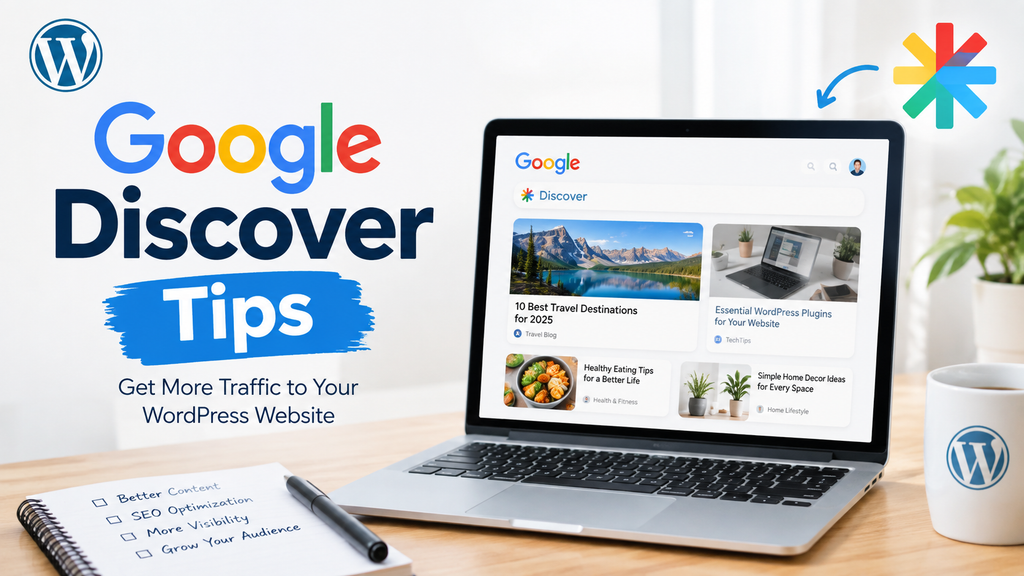
Google Discover Tips: How to Get Your Content Noticed in 2026. Google Discover has now quietly become one of the biggest traffic sources on the planet. It’s pumping out more clicks for many publishers than conventional search results, but publishers are still largely completely ignoring it.
And if you own a blog, a news website, or any sort of business that’s centered around content, getting a grasp on how Discover works isn’t just a nice-to-have. It’s a potential gold mine that puts you in front of people who had no idea they wanted to be there.
The dilemma? Discover doesn’t follow traditional SEO logic. There are no keywords you want to rank for.
You have no search terms that you are optimizing for.
Rather, Google will decide which content is presented to individuals based on their intention, the content they are consuming, and indicators of high quality. Google Discover Tips.
What Is Google Discover And Why Is It Important?
Google Discover is a customised feed that you see in the Google app and on the Android device’s mobile home page. You don’t have to type any words to access Discover. Google Discover displays articles, videos, and more depending on your Web & App Activity.
Think of it as Google’s version of a social media feed, except you don’t follow anyone. The algorithm learns what you like and serves you more of it. Google Discover Tips.
Why This Matters for Publishers
Traffic can be huge. Discover sends almost double the clicks of normal search on some sites. And on news and media sites that use Discover, the share is even more uneven 68 percent of their Google traffic is from Discover.
However: Discover traffic fluctuates. It can be at millions of clicks in one month and dead zero the next. One publisher used to generate 10m clicks a month, and after a single algorithm update has under 1m. Google Discover Tips.
That is why you should use Discover as a supplement to your search traffic, not as a substitute.
How Content Becomes Eligible for Discover
The great news: no submission or additional tag needs to be added. Content can appear naturally if it’s crawled and indexed by Google and follows the content policies for Discover.
The bad news: being eligible doesn’t automatically mean you will. Google has the ability not to ever display your content if it doesn’t meet their standards. Google Discover Tips.
The Non-Negotiable Requirements
Before anything else, your pages must be:
- Indexed by Google If it’s not in the index, it can’t appear
- Crawlable No accidental
noindextags or robots.txt blocks - Policy-compliant Follow Google’s content policies for Discover
Also Check: The Best AI Content Writing Tools in 2026: What Actually Works
Google Discover Tips: The Foundation of Discover Visibility
Discover is mobile-first. Most users scroll through their feed on phones. If your site performs poorly on mobile, you’re already at a disadvantage.
Image Requirements
Images are the number one technical factor for Discover. Google specifically advises large, high-quality images as these are more apt to produce visits through the feed. Google Discover Tips.
Here’s what you need:
| Requirement | Specification |
|---|---|
| Minimum width | 1,200 pixels |
| Aspect ratio | 16:9 recommended |
| Total pixels | More than 300,000 |
| Meta tag | max-image-preview:large |
Also, avoid using your site logo or text-heavy images. These don’t perform well in the feed.
Core Web Vitals and Mobile Experience
Google doesn’t explicitly state that Core Web Vitals is a Discover ranking factor. But if you’re underperforming, it’s impacting the user experience. And the user experience impacts the engagement signals, which do count. Google Discover Tips.
Focus on:
- Quick: even on mobile connections
- Visual stability: No annoying layout shifts
- Interactivity: Buttons and links should be responsive
- No disruptive pop-ups: These make for a bad experience
Structured Data and Publisher Identity
While structured data won’t get you into Discover by itself, it helps Google understand your content and your site’s identity.
Use Article or NewsArticle schema to clarify:
- Publication date
- Author information
- Content type
Organization schema on your homepage reinforces your brand identity as a publisher.
Content Strategy: What Actually Performs in Discover
Discover rewards content that people actually want to read. The algorithm is trained to filter out clickbait and low-quality material.
The Content Types That Work
Not all topics perform equally. Based on data from large publisher networks, here’s roughly how different verticals split their Google traffic between Discover and search:
- News: 76% Discover
- Tech, Gaming, Sports, Travel: ~50% Discover
- Food: Only 2% Discover
Discover tends to favor content that’s:
- Timely Relevant to current interests
- Story-driven Tells a compelling narrative
- Unique Offers insights you can’t find elsewhere
- Evergreen Older content can surface if it matches user interests
Write Titles That Inform, Not Manipulate
Start writing the outline with Google’s advice in mind: Use titles that accurately reflect the content and avoid clickbait.
- Incorrect title: “You’ll Never Guess What This CEO Said About Cryptocurrency!”
- Appropriate title: “Crypto CEO Clarifies Reason for Upcoming Regulations in 2026”
The first one keeps the reader in suspense. The second one gives you the content of the article.
Exactly Discover excludes any strategy that appeals to “morbid curiosity, titillation or outrage”. For example, if your title is built around shock, it will be unsuccessful.
Images That Stop the Scroll
Your featured image is your first impression. It needs to:
- Be relevant to the content
- Be high resolution
- Work well at large sizes
- Avoid text overlays
- Represent the story accurately
Generic stock photos don’t perform as well as original, relevant imagery.
Common Mistakes
Mistake 1: Clickbait and Misleading Previews
If your title or image hints at a content that the article won’t deliver, Discover will punish you. Google specifically mentions “deliberately misrepresenting the content of a page” as a violation.
Mistake 2: Ignoring Content Policies
Discover has specific policies beyond general search guidelines. Violations can lead to manual actions in Search Console and removal from the feed.
Key policy areas:
- Transparency: Clear dates, bylines, contact information
- Ads: Paid content shouldn’t exceed editorial content
- Misleading content: Previews must match the actual content
Mistake 3: Treating Discover Like Search
Search and Discover are fundamentally different:
| Search | Discover |
|---|---|
| User has intent | User is browsing |
| Keyword-driven | Interest-driven |
| Predictable traffic | Volatile traffic |
| Long-tail opportunity | Authority-dependent |
Sites with low domain authority often struggle to break into Discover at all. There’s a threshold where sites without sufficient authority simply won’t appear.
Mistake 4: Relying Too Heavily on Discover
This is the biggest strategic mistake. Discover traffic is free, but as Google’s John Mueller has noted, “someday it can be zero”.
Publishers that relied exclusively on Discover for their audience have seen that go away entirely in a matter of days. Always diversify: email lists, social channels, direct traffic, search.
Measuring Discover Performance
Google Search Console includes a Discover performance report. You can see:
- Impressions How often your content appeared
- Clicks How many people tapped through
- CTR Click-through rate
The report holds 16 months of data, which helps you spot trends and correlate traffic changes with algorithm updates.
What to Watch For
- Sudden drops Check if they coincide with Google core updates
- CTR changes May indicate title or image issues
- Impression growth without clicks Your content is appearing but not compelling
FAQs
What is Google Discover in simple terms?
Google Discover is a personalized content feed that shows articles and videos based on your browsing history and interests. It appears in the Google app and on Android home screens. You don’t search for anything Google brings content to you.
Do I need a plugin to appear in Google Discover?
No. Discover decides inclusion algorithmically. Plugins can help you meet technical requirements like image size and structured data, but they can’t guarantee inclusion.
How long does it take to see Discover traffic?
There’s no fixed timeline. Some sites see traffic within days of publishing quality content. Others wait months. It depends on your site’s authority, content quality, and whether your topics align with what users are interested in.
Why did my Discover traffic suddenly drop?
Discover traffic is inherently volatile. Common causes include Google core updates, changing user interests, seasonal shifts, or content quality issues. Check Search Console for manual actions and review recent Google algorithm updates.
Can I optimize for Discover and search at the same time?
Yes, but they require different approaches. Search optimization focuses on keywords and intent. Discover optimization focuses on visual appeal, timely topics, and engagement. The overlap is in content quality and technical foundations.
What image size is best for Google Discover?
Google recommends images at least 1,200 pixels wide with a 16:9 aspect ratio. Total pixel count should exceed 300,000. Enable large image previews with the max-image-preview:large meta tag.
Does Google Discover work for small blogs?
It’s harder for small sites with low authority. Discover has an authority threshold sites without sufficient brand signals often don’t appear at all. Focus on building topical authority and brand recognition first.
Is AMP required for Google Discover?
No. Google no longer requires AMP for Discover. Standard HTML pages with proper image settings work fine.
Conclusion
Google Discover is an amazing but very inconsistent method of getting traffic. It’s very interested in images and up to date and truly useful content. It’s very choosy about what it rewards, and it’s very quick to penalise clickbait, bare content, and lack of technical attention.
There’s no guaranteed way of winning at the Google Discover tips in this guide. But they will at least guarantee that when the algorithm brings you traffic you’ll be ready to profit from it.
Get the tech right big images, fast on mobile, index everything. Then bring the story and make it useful. Keep an eye on your Search Console data and adapt.
And as a general rule of thumb: Discover should be one of the sources of traffic not the only one.
Notice a Discover traffic spike? Tell us below. If you enjoyed this guide, share it with other publishers who are trying to figure out how Discover works.

2 Comments