Multi-Chain Crypto Wallets Explained 2026: Complete Guide
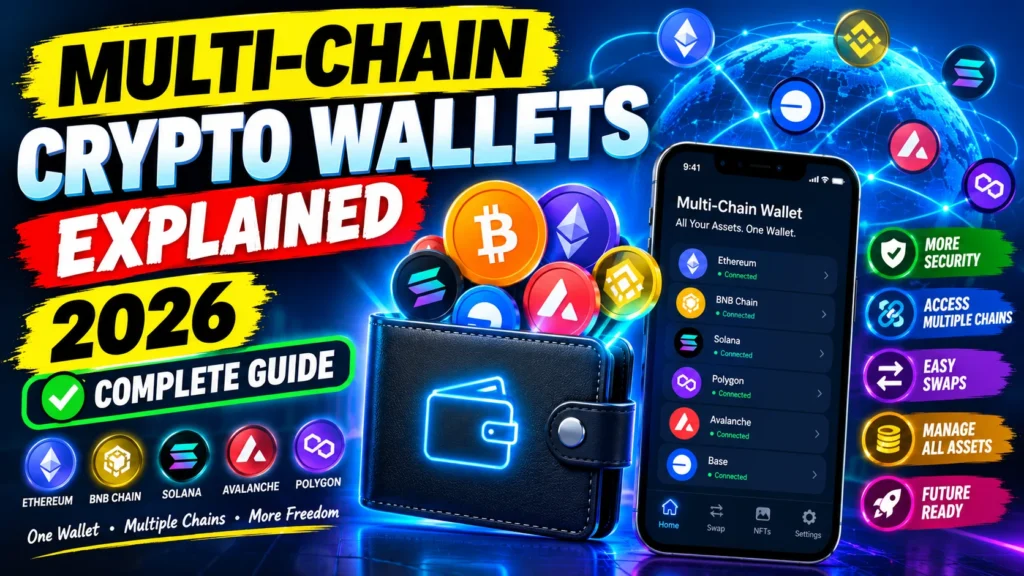
Multi-Chain Crypto Wallets Explained 2026: The mess we all deal with. Let me guess your setup right now. You’ve got a little ETH on Ethereum. Some SOL on Solana. Maybe you chased a meme on BNB Chain and now it’s just sitting there. And a little Bitcoin you promised yourself you’d never touch.
And to check it all, you’re opening MetaMask, then Phantom, then Trust Wallet… it’s a joke. It’s like having 5 different bank apps for the same money. That’s the whole reason multi-chain wallets exist. One app, one login, everything in one place. No more app-hopping just to see your own net worth.
I’m going to break it down with no BS what it is, how it actually works, what’s great about it, what can absolutely screw you over, and how to not lose your shirt.
Multi-Chain Crypto Wallets Explained 2026: Okay so what is it?
- Simple. A multi-chain wallet is a wallet that doesn’t care what blockchain you’re on.
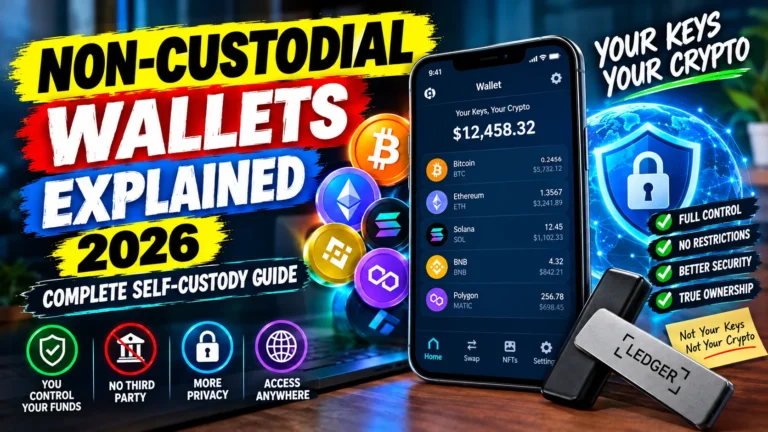
- The key part is self-custody.
- That means you have the keys. Not an exchange. Not some company. You If you lose your recovery phrase, it’s gone. If you keep it safe, nobody can touch it. Real ownership.
- Instead of 3 different wallets for 3 different chains, you have one.
- Some wallets go nuts with it: Trust Wallet supports like 100+ chains now. Others keep it tight.
- Phantom does like 8 chains Solana, Ethereum, Bitcoin, Base but the experience is way smoother.
How the hell does one phrase control 20 blockchains?
It’s weird when you first hear it, but it’s clever.
One phrase to rule them all
You get 12 or 24 words when you create the wallet. You know, the ones they tell you to write on paper and hide. That one set of words is secretly creating all your addresses. Your Ethereum address? From those words. Your Solana address? Same words. Bitcoin? Same words.
Multi-Chain Crypto Wallets Explained 2026. That’s why it’s so convenient. And also why it’s terrifying. If someone finds that piece of paper, they don’t just get your ETH, they get everything. On every chain.
Different wallets, different tricks
Not everyone stores that key the same way:
- The normal way one seed, all chains. Trust Wallet, Exodus, that crowd. Simple and works.
- MPC the key is never in one place. Multi-Chain Crypto Wallets Explained 2026. It’s chopped into shards. So even if someone hacks your phone, they only get a useless piece. BitGo uses this to give you the same address on Ethereum, Polygon, Arbitrum, all of them.
- TSS basically same idea as MPC, just a different flavor. Spreads the responsibility around.
You don’t need to nerd out on it. Just know the result is one wallet = many addresses.
And then there’s gas. Ugh.
This is still the worst part. Every chain wants its own pocket money. Multi-Chain Crypto Wallets Explained 2026. ETH wants ETH. Solana wants SOL. BNB Chain wants BNB. You can’t pay an Ethereum fee with your Solana balance.
It’s stupid, I know. Some wallets are finally wising up. Ambire has this Gas Tank where you can just pay in USDC. Multi-Chain Crypto Wallets Explained 2026. Mixin lets you swap without even thinking about gas. BitGo has pre-funded gas tanks per chain. Multi-Chain Crypto Wallets Explained 2026. We’re getting there, but for 90% of wallets today, you still need to keep a little native token on each chain. I keep like $10 worth of each just to avoid getting stuck.
Why I actually like them?
- You can finally see everything. One dashboard. Your whole portfolio. It’s such a relief after juggling apps.
- DeFi without the headache. You want to lend on Arbitrum and then buy something on Solana? You don’t need to switch wallets. Just connect the same one everywhere.
- Swaps inside the wallet. Most good ones let you swap ETH on Ethereum to SOL on Solana right there. You don’t need to go find a bridge site and pray you didn’t click a phishing link.
- Just less to mess up. Multi-Chain Crypto Wallets Explained 2026. One app, one phrase to back up properly. Less chance you send something to the wrong place because you were in a rush between apps.
The ugly side
I’m not going to hype it up without warning you. Multi-Chain Crypto Wallets Explained 2026.
- Bigger target. More chains means more code, more connections. More places for a bug to hide. If they screw up the integration for one random chain, it could affect the whole wallet.
- You put all your eggs in one basket. Multi-Chain Crypto Wallets Explained 2026. With separate wallets, if one gets compromised, you only lose that one chain. With multi-chain, one compromised phrase = game over everywhere. It’s all gone.
- Gas still sucks. I’ve seen people with $5k in USDC on Ethereum crying because they have $0 ETH and can’t move it. Happens all the time.
- “Supported” doesn’t mean good. A wallet will say “We support 100 chains!” Yeah, but for 80 of them you can only send and receive. You can’t stake, you can’t do DeFi, nothing. Make sure YOUR chains are fully supported, not just listed.
Which wallet should you even use in 2026?
Honestly, there’s no “best.” It’s what you use.
- Trust Wallet: If you want it to support everything under the sun. 100+ chains. Does everything okay.
- MetaMask: If you live on Ethereum and all the EVM chains. Still the king for DeFi. Works with every site.
- Phantom: If you started on Solana. Now does ETH and BTC too and the UI is just clean. My personal daily driver.
- Exodus: If you hate ugly crypto UIs. Looks great on desktop and phone, super simple for beginners. 50+ chains.
- Rabby: For the hardcore DeFi people. 110+ EVM chains, fully open source, and it actually warns you “Hey this transaction is going to drain you, don’t sign this.” Lifesaver.
- BitGo: For serious money / institutions. Uses that MPC tech, one address across all EVMs. Not really for someone with $500 in crypto.
How to pick one without overthinking it?
Don’t look at the chain count.
- What 3 chains do you use every single day? Does the wallet do those 3. That’s your answer.
- Is it open source? Rabby is fully open source. Anyone can check the code. Some others are “source available” but not really open. Closed source? I personally wouldn’t trust it with big money.
- Does it have real security stuff? Can I connect my Ledger? Does it simulate my transaction before I sign? Does it have a proper address book? If no, skip.
- Try it with 5 bucks. Seriously. Download it, send $5 on a cheap chain, do a swap. You’ll know in 2 minutes if you hate the UI.
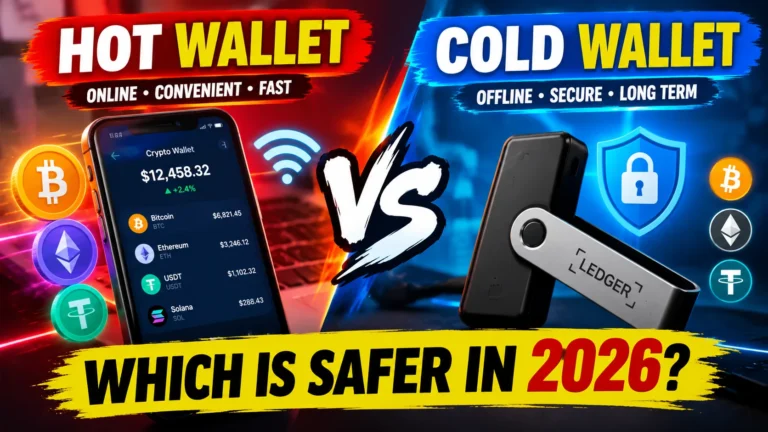
And if you have more than a couple thousand in crypto, please get a hardware wallet. Keep the big stack cold, connected to your hot multi-chain wallet. Hot wallet for playing around, cold wallet for saving.
How not to get hacked. The stuff that actually matters.
- Use more than one wallet. I do 3. One vault wallet that NEVER touches a website. That’s long-term holds. One main hot wallet for DeFi I use daily. One burner wallet for random airdrops and new mint sites I don’t trust. If the burner gets drained, I don’t even care.
- Stop copying addresses from your transaction history. This is how people lose 5 figures. Scammers send you dust from an address that looks almost exactly like yours like your address is 0x1234…5678 and theirs is 0x1234…5679. You copy it from history without checking, and boom, money gone. Use the address book. Check the WHOLE address. And for big amounts, send a $1 test first. Always.
- Clean your approvals. You approved USDC on some random site 6 months ago? That approval is probably still active. If that site gets hacked, your USDC is gone. Go to Revoke.cash once a month. Takes 2 minutes.
- Your laptop IS your wallet. If your laptop has malware, your wallet is toast. Don’t install 30 random Chrome extensions. Don’t torrent stuff on your crypto computer. Keep it clean.
- NOBODY legit will ever ask for your seed phrase. Ever. No support team. No website. No “validate your wallet” pop-up. If someone asks, it’s a scam. If someone DMs you first on Discord/Telegram offering help, it’s a scam. 100% of the time.
Also Check: AI Crypto Trading Bots: How They Work in 2026
Dumb mistakes that cost real money
Wrong chain send. Sending USDC on Ethereum to a Solana address. It’s not coming back. Ever. Triple check that little network dropdown at the top before you hit send.
Screenshotting your seed phrase. Your screenshots sync to iCloud / Google Photos. Your notes app can be hacked. Paper. Or metal. Offline. That’s it.
Blind signing. If your wallet shows you a simulation and it says you’re about to send your entire balance when you only wanted to swap $20 DO NOT SIGN. Close it.
Unlimited approvals. When a site asks “Allow this app to use all your USDC?” click edit and put in only what you need. Don’t give unlimited forever.
Random bridges. Bridges have been hacked for literally billions. Don’t use some brand new bridge you saw on Twitter because it promised zero fees. Use the big ones that have survived for years.
So what’s next?
The goal is to make chains invisible. You shouldn’t have to know if you’re on Arbitrum or Base. You should just have dollars and be able to use them. That’s called chain abstraction and it’s coming fast.
- Seed phrases are also dying. Passkeys with Face ID and fingerprints are way safer — you can’t get phished as easily.
- And soon you won’t even think about gas. You’ll pay with whatever token you have.
- But tech won’t fix laziness. You still have to be careful.
Frequently Asked Questions
What is a multi-chain wallet in simple terms?
One self-custody wallet that holds assets from multiple blockchains Ethereum, Solana, Bitcoin, etc all under one recovery phrase.
Are they safe?
As safe as you are. The tech is solid, but if you give unlimited approvals and store your phrase in your email, you’ll get drained no matter what wallet you use.
Best wallet in 2026?
For max coverage, Trust Wallet. For EVM DeFi, MetaMask/Rabby. For Solana folks, Phantom. For beginners, Exodus.
One phrase for everything?
Yep. Convenient but risky. Protect that phrase like it’s your bank account, because it literally is.
How do gas fees work?
Each chain still needs its own gas token for now. Some new wallets let you pay in stablecoins, but keep a little native token on each chain you use to be safe.
I sent crypto to the wrong chain, can I get it back?
Almost always no. Assume it’s gone. That’s why we do test transactions.
What’s address poisoning?
Scam where they send you a tiny amount from a lookalike address so you accidentally copy the fake one later.